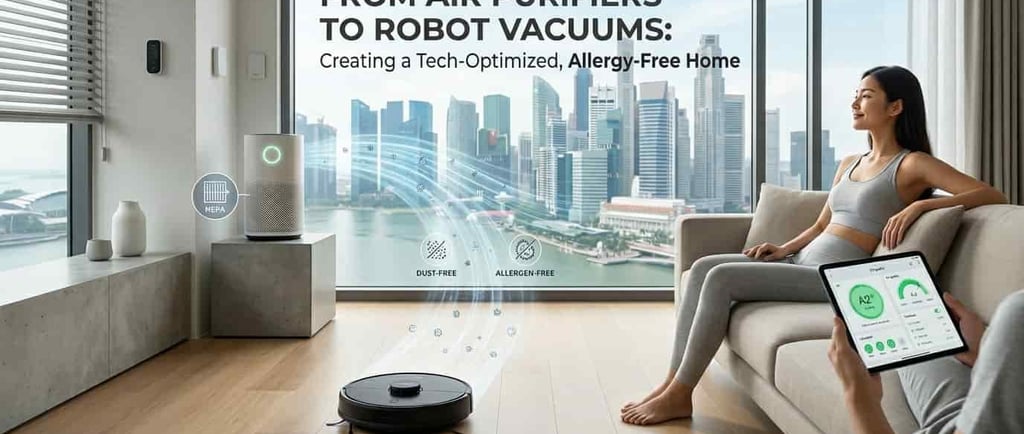
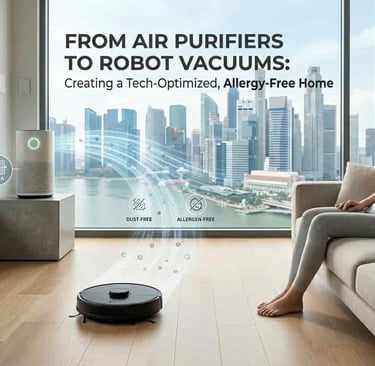
From Air Purifiers to Robot Vacuums: Creating a Tech-Optimized, Allergy-Free Home
By integrating high-tech hardware—ranging from HEPA-filtered air purifiers to AI-driven robot vacuums—you can transform your living space into a tech-optimized, allergy-free haven.
5/12/20266 min read
For many, the home is a sanctuary. However, for the millions of people living with respiratory sensitivities, it can also be a minefield of microscopic triggers. Dust mites, pet dander, pollen, and mold spores are invisible tenants that often refuse to leave. In a bustling, humid environment like Singapore, these challenges are amplified by the tropical climate, making traditional cleaning methods sometimes feel like an uphill battle.
Fortunately, we are living in a golden age of home maintenance technology. The shift from manual labor to "smart" ecosystems allows homeowners to maintain a clinical level of cleanliness with significantly less effort. By integrating high-tech hardware—ranging from HEPA-filtered air purifiers to AI-driven robot vacuums—you can transform your living space into a tech-optimized, allergy-free haven.
The Modern Battle Against Allergens
The first step in tech-optimizing your home is understanding the enemy. Allergens aren't just on the floor; they are suspended in the air and embedded in soft furnishings. Static surfaces act as magnets for particulate matter. In urban settings, fine dust (PM2.5) from traffic and construction often infiltrates even the tightest-sealed apartments.
In a high-density city-state, the concentration of pollutants can rise quickly. While high-tech gadgets are incredible tools, they work best when they complement a consistent hygiene schedule. For those with busy professional lives, balancing deep cleaning with a hectic calendar can be difficult. This is why many residents choose to supplement their tech arsenal with professional house cleaning services in Singapore. A professional touch ensures that the "blind spots" of technology—like the tops of high cabinets, ceiling fans, or deep upholstery—are handled, leaving your gadgets to manage the daily upkeep.
Phase 1: Mastering Air Quality with Smart Purification
If you want an allergy-free home, you must start with the air you breathe. Indoor air quality can often be significantly worse than outdoor air due to a lack of circulation and the accumulation of Volatile Organic Compounds (VOCs) from household cleaners, paints, and new furniture.
HEPA Filtration: The Gold Standard
When selecting an air purifier, the most critical component is the HEPA (High-Efficiency Particulate Air) filter. True HEPA filters are mechanically rated to trap 99.97% of particles as small as 0.3 microns. This size is particularly important because it includes the most common allergens like pollen, mold spores, and even some bacteria. For those using high-performance workstations that generate significant heat and airflow, keeping the ambient air clean also prevents dust from settling inside expensive hardware.
Smart Sensors and Auto-Mode
Modern purifiers now come equipped with laser-based particulate sensors. These devices monitor air quality in real-time, measuring PM2.5 levels constantly. When they detect a spike in pollutants—perhaps from cooking, lighting a candle, or opening a window during haze season—they automatically ramp up fan speeds. Integrating these with a smart home hub allows you to track air quality history and receive mobile alerts when it’s time to change filters, ensuring the device never runs at sub-optimal efficiency.
Phase 2: Autonomous Floor Care via Robot Vacuums
The days of pushing a heavy upright vacuum every evening are over. Robot vacuums have evolved from random "bump-and-turn" toys into sophisticated navigational machines that utilize spatial computing.
LiDAR Mapping and Obstacle Avoidance
The latest generations use LiDAR (Light Detection and Ranging) to create millimeter-accurate maps of your home. This technology, often found in self-driving cars, ensures every square inch of the floor is covered without the robot getting stuck on power cables or furniture legs. For allergy sufferers, this consistent, daily removal of floor-bound dust is a game changer, as it prevents allergens from being kicked back into the breathing zone by foot traffic.
The Self-Emptying Advantage
One of the biggest risks for allergy sufferers occurs when emptying the vacuum bin, which often releases a cloud of fine dust back into the air. High-end robot vacuums now feature self-empty stations. These bases suck the debris into a sealed, disposable bag, ensuring you don't come into contact with the allergens your robot just collected.
While these robots are excellent for daily maintenance, they can’t scrub stubborn stains or reach behind heavy server racks and appliances. To maintain a truly pristine environment, scheduling a weekly house cleaning service can fill the gaps. A weekly professional visit ensures that the corners, crevices, and baseboards the robot misses are hand-cleaned, maintaining a baseline of hygiene that supports your tech’s performance and your own respiratory health.
Phase 3: High-Tech Fabric and Upholstery Care
Soft surfaces like sofas, curtains, and mattresses are the primary breeding grounds for dust mites. In humid climates, these areas require more than just a quick brush-off.
UV-C Sanitization
Handheld "bed vacuums" equipped with UV-C light and high-frequency vibration pads are now an essential part of a tech-optimized home. The vibration loosens the grip of dust mite larvae on fabric fibers, while the UV-C light helps neutralize bacteria and pathogens at a cellular level. Using these on your mattresses and pillows once a week significantly reduces nighttime sneezing and morning congestion.
Steam Cleaning Technology
Steam is a powerful, chemical-free disinfectant. High-pressure steam cleaners can kill 99.9% of household bacteria and dust mites using nothing but water heated to over 100°C. This is ideal for sanitizing rugs and heavy drapes without leaving behind chemical residues that could further irritate sensitive airways or damage delicate electronics nearby.
Phase 4: Environmental Monitoring and Automation
A tech-optimized home is a monitored home. To keep allergies at bay, you need actionable data.
Smart Hygrometers: In Singapore, humidity is a major factor in mold growth. Smart hygrometers can trigger your dehumidifier or air conditioner's "Dry" mode the moment humidity levels cross 60%, effectively stopping mold in its tracks before it becomes an airborne threat.
Smart Blinds: Pollen counts and outdoor pollutants are often highest at specific times of the day. Program your smart blinds to stay closed during peak hours to reduce infiltration.
Centralized Control: Use "Scenes" in your smart home app. For example, an "Away" scene can trigger the robot vacuum to start, set the air purifier to "Turbo," and ensure all windows are sealed, all with one tap as you leave for work.
The Synergy of Tech and Human Expertise
It is easy to fall into the trap of thinking technology can do it all. However, even the most advanced sensors have "blind spots." A "set and forget" mentality can lead to "cleanliness decay" in areas where sensors don't reach, such as inside closets, under heavy beds, or along high-reach shelving.
The most successful allergy-management strategies utilize a hybrid approach. Your air purifiers and robots handle the daily micro-level cleaning. However, the macro-level hygiene—scrubbing tile grout, degreasing kitchen vents, and deep-sanitizing bathroom surfaces—requires human precision and professional-grade solutions.
By employing weekly house cleaning professionals, you ensure that the heavy lifting is done consistently. This prevents your air filters from clogging prematurely and keeps your robot’s brushes from becoming tangled in deep-seated grime. Furthermore, relying on reputable house cleaning services in Singapore gives you access to industrial-grade equipment that might be too bulky or expensive for a typical household, such as high-powered water-induction extractors or specialized eco-friendly sanitizing solutions.
Advanced Humidity Management: The Invisible Threat
In many parts of the world, dust is the primary concern. In the tropics, however, mold is the silent architect of allergies. High humidity levels act as a catalyst for fungal growth on walls, leather goods, and even inside the cooling fans of high-performance computers.
Dehumidification Systems
A tech-optimized home must include active dehumidification. While many air conditioners have a "dry" mode, dedicated compressor-based dehumidifiers are much more efficient at extracting liters of water from the air daily. Modern units are "smart," allowing you to set a target humidity (usually 45-50%) and forget about them. This environment is inhospitable to dust mites and mold, creating a dry, crisp atmosphere that feels more like a professional studio or data center than a humid apartment.
Smart Home Integration for Humidity
By linking your dehumidifier to a smart plug and a separate humidity sensor, you can create "if-this-then-that" (IFTTT) routines. For instance, if the humidity in your home office rises above 55%, the dehumidifier kicks in until it drops back to 45%. This granular control is essential for protecting both your health and your electronic investments.
Investing in Your Wellbeing
Creating a tech-optimized, allergy-free home is an investment in your long-term health and daily productivity. When you aren't fighting off a constant runny nose or itchy eyes, your quality of life and focus improve dramatically.
By combining the consistent, data-driven power of smart air purifiers and autonomous vacuums with the thorough, detail-oriented work of a professional cleaning service, you create a multi-layered defence against allergens. In 2026, a clean home is no longer just about aesthetics—it’s about using every tool at our disposal to breathe easier and live better.
Whether you are upgrading to the latest LiDAR-equipped vacuum or setting up a network of air quality sensors, remember that technology is the ultimate assistant in the pursuit of a healthier sanctuary. By maintaining a clean environment through both tech and professional support, you ensure that your home remains the safe haven it was always meant to be.
Contact and Contributions
Have a question, suggestion, or interested in collaborating with us?
Strongbox Technology welcomes contributions from professionals, writers, and companies in the fields of AI, SaaS, and high-performance computing.
Whether you would like to share insights, submit an article, or explore partnership opportunities, we’d be glad to hear from you.
© 2026 Strongbox Technology. All rights reserved.