How Technology Helps Families Preserve Memories: Taoist Rites
When a family in Singapore loses a parent or grandparent, the practical load lands fast: calling a funeral parlour, confirming wake dates, reaching relatives overseas, and deciding how to mark a life that spanned decades. A Taoist funeral in Singapore carries specific rites tied to dialect group and family custom, and those rites still need a human priest and present family members to carry them out properly. Technology’s role sits around that core, not inside it.
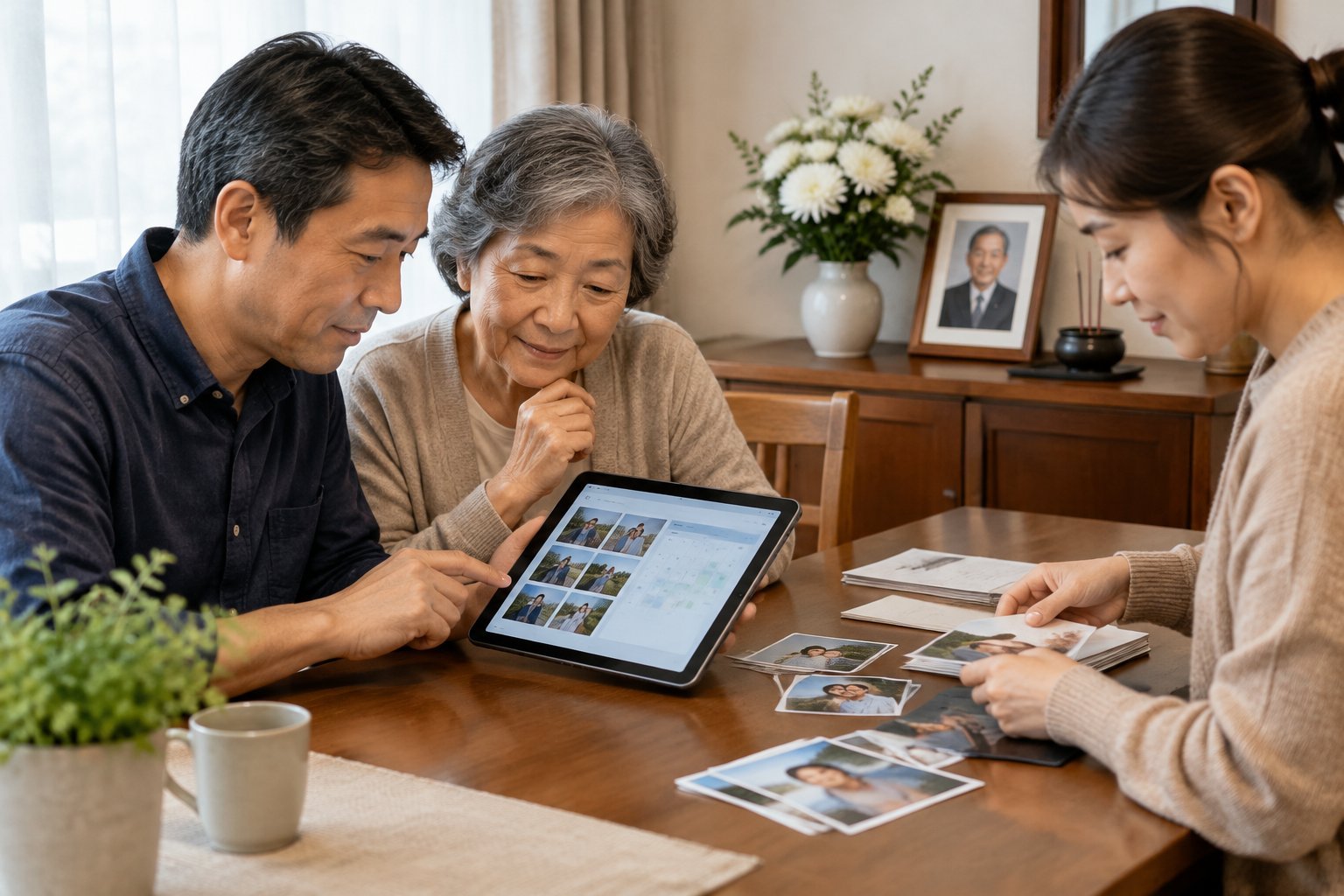
Shared calendars, group chats, and digital photo folders let siblings and cousins split tasks without everyone crowding into one living room. One relative confirms the wake venue while another gathers old photographs for a eulogy, and a third manages remembrance materials like an obituary notice or online tribute page. None of this changes the rites themselves. It changes how smoothly a family gets through the days surrounding them.
How Can Families Coordinate a Taoist Funeral Online?
Families coordinate most of the logistics around a Taoist funeral online, while the religious rites stay with the priest and the people physically present. Booking, scheduling, and communication can move through phone calls, messaging apps, and shared documents; chanting, offerings, and ritual timing cannot.
Taoist funeral arrangements typically begin with a call to a funeral director, who helps the family select a funeral parlour, confirm wake dates, and book a Taoist priest matched to the family’s dialect group. Much of that first conversation happens by phone or video call now, which spares the family an in-person meeting during an already difficult stretch.
What Should Families Decide Before Booking a Service?
Before contacting a funeral director, the family needs rough agreement on a few points: which dialect group’s rites to follow, how many days the wake will run, and whether burial or cremation follows. Dialect customs (Hokkien, Teochew, Cantonese, and others) shape the chanting style, ritual sequence, and even the paper offerings used, so this decision shapes everything booked afterward.
It helps to have one person designated to speak with the funeral director on behalf of the family, even if decisions are made by group discussion first. Those seeking a structured starting point can look at Taoist funeral arrangements from Harmony Funeral Care, which lays out typical taoist funeral services and package inclusions as one option among several in the market.
How Can Shared Tools Simplify Wake and Priest Coordination?
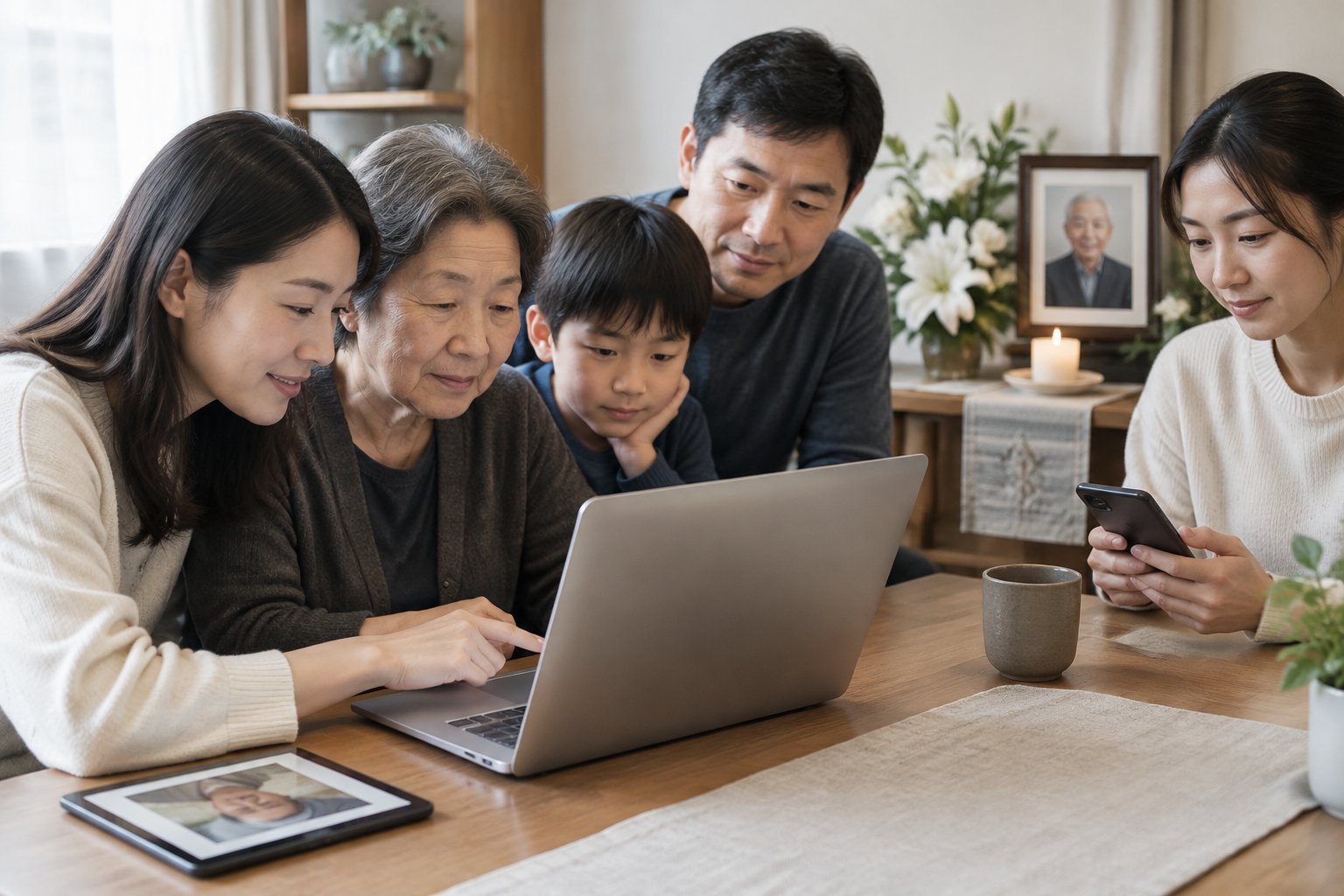
A shared calendar or group chat keeps everyone aligned on wake arrangements without repeated phone calls. Once the funeral parlour confirms dates, posting the schedule (visiting hours, prayer session times, the day of the funeral procession) to a family group means relatives in Kuala Lumpur or Sydney see the same information at the same time.
Coordinating with Taoist priests often involves a few back-and-forth confirmations on ritual timing and requirements. A funeral director usually handles this directly, but sharing a simple checklist with the wider family (what to wear, when to arrive, what offerings to bring) prevents confusion on the day of the Taoist funeral wake.
What Belongs in a Digital Obituary or Memorial?
A digital obituary or memorial page should carry the practical details and the personal ones together: dates and venue for the wake, plus a short biography that captures who the person was. Many families now set up a simple online page or shared document for this rather than relying only on a printed obituary notice.
A clear structure helps:
- Full name, dates of birth and passing, and wake or funeral service venue
- A short biography covering family role, career, and character
- Space for a eulogy or tribute written by close family
- Photographs spanning different decades of the person’s life
Some families also note details like the involvement of female embalmers, where that matters to the family’s comfort and preferences, though this is arranged directly with the funeral home rather than published online.
How Can Digital Memories Respect Taoist Rites?
Digital tools support remembrance without replacing the religious core of a Taoist funeral. Photos, stories, and tribute pages can be gathered and shared from anywhere, but chanting, bowing, and ritual offerings still require a priest and family members physically present.
Practices differ by dialect group and by how religious or secular a family considers itself, so no single digital habit fits every household the same way. What stays consistent is the separation between tasks that need a screen and tasks that need a body in the room.
Which Traditions Need In-Person Participation?
Core Taoist funeral rites need the family and priest physically present; no video call or app substitutes for this. Chanting sessions, the folding and burning of joss paper and paper offerings, the preparation of paper houses, and bowing before the altar are performed by hand, in person, according to Taoist beliefs about guiding the spirit toward the afterlife.
Filial piety shapes much of this participation. Children and grandchildren are expected to take part directly in taoist funeral customs such as the wake vigil and procession, not simply observe from a distance. Livestreaming a wake lets distant relatives watch, but it does not fulfil the role family members are expected to play in person during these taoist funeral practices.
How Can Relatives Contribute Photos and Stories?
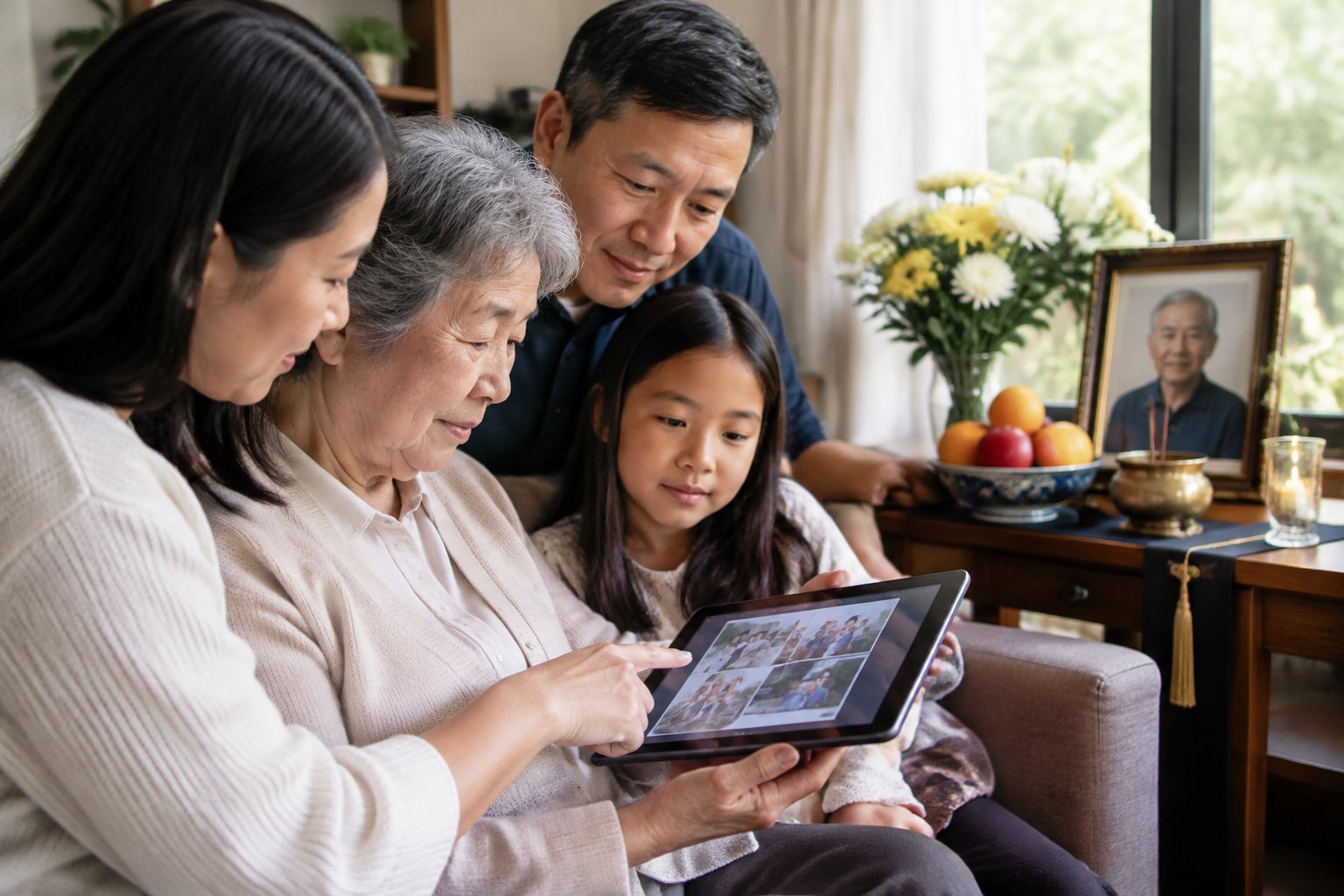
Relatives who cannot attend in person still contribute meaningfully by sending photographs, memories, and written tributes ahead of the wake. A shared folder or messaging group works well for this: overseas family members upload old photos, short notes, or voice messages that get printed, displayed, or read aloud during the service.
This matters most for the biography and eulogy, which often draw richness from multiple relatives’ memories rather than one person’s recollection. A cousin might remember a specific story about the deceased’s younger years that an immediate family member never heard; collecting these beforehand strengthens the tribute delivered during the taoist funeral ceremony.
What Happens After the Procession and Cremation?
After the funeral procession and cremation or burial, the family’s attention shifts from ceremony logistics to resting-place details and ash collection. Ash collection is scheduled directly with the crematorium, and many families in Singapore then choose a columbarium niche for long-term placement.
Recording the columbarium name, niche number, and visiting hours somewhere the whole family can access it (a shared note or document) prevents this information from being lost or held by only one relative. Some families attach this information to a memorial page alongside photographs, making it easy for anyone planning a visit to find the location without calling around first.
How Can a Memorial Support Ongoing Remembrance?
A memorial page supports ongoing remembrance by keeping photographs, biography details, and resting-place information together in one place that relatives can return to over time. Platforms built for this purpose, sometimes shared through an unlisted link rather than a public listing, let families decide who sees the page without making it fully private or password-protected.
It is worth understanding that an unlisted link is not the same as a genuinely private space: anyone with the link can view it, and it may be indexed or shared further than intended. Families wanting stricter control should check whether a platform offers actual access restrictions rather than assuming an unlisted page is equivalent to a locked one.
Some services now offer experimental features like AI-generated voice or video recreations of the deceased. These remain novel rather than routine, and most funeral guidance in Singapore treats them as optional extras, not a standard part of memorial planning. A straightforward page with real photographs, a written biography, and space for relatives to add their own memories serves most families well without raising the questions these newer tools can bring.
Conclusion
Coordinating a Taoist funeral in Singapore works best when practical tasks move online and religious rites stay in the hands of the priest and family. Shared calendars and group chats ease the logistics of booking a funeral parlour, confirming wake arrangements, and gathering photographs from relatives near and far. The chanting, offerings, and procession remain acts performed in person, shaped by dialect custom and family preference.
A well-built memorial page, created during or after the wake, keeps a biography, eulogy, and resting-place details together for the family to return to in the years ahead. Treating digital tools as support for the practical side of remembrance, rather than a replacement for presence, keeps the balance most families are looking for during a difficult time.