
5 Best Security Features for Singapore Condos in 2026
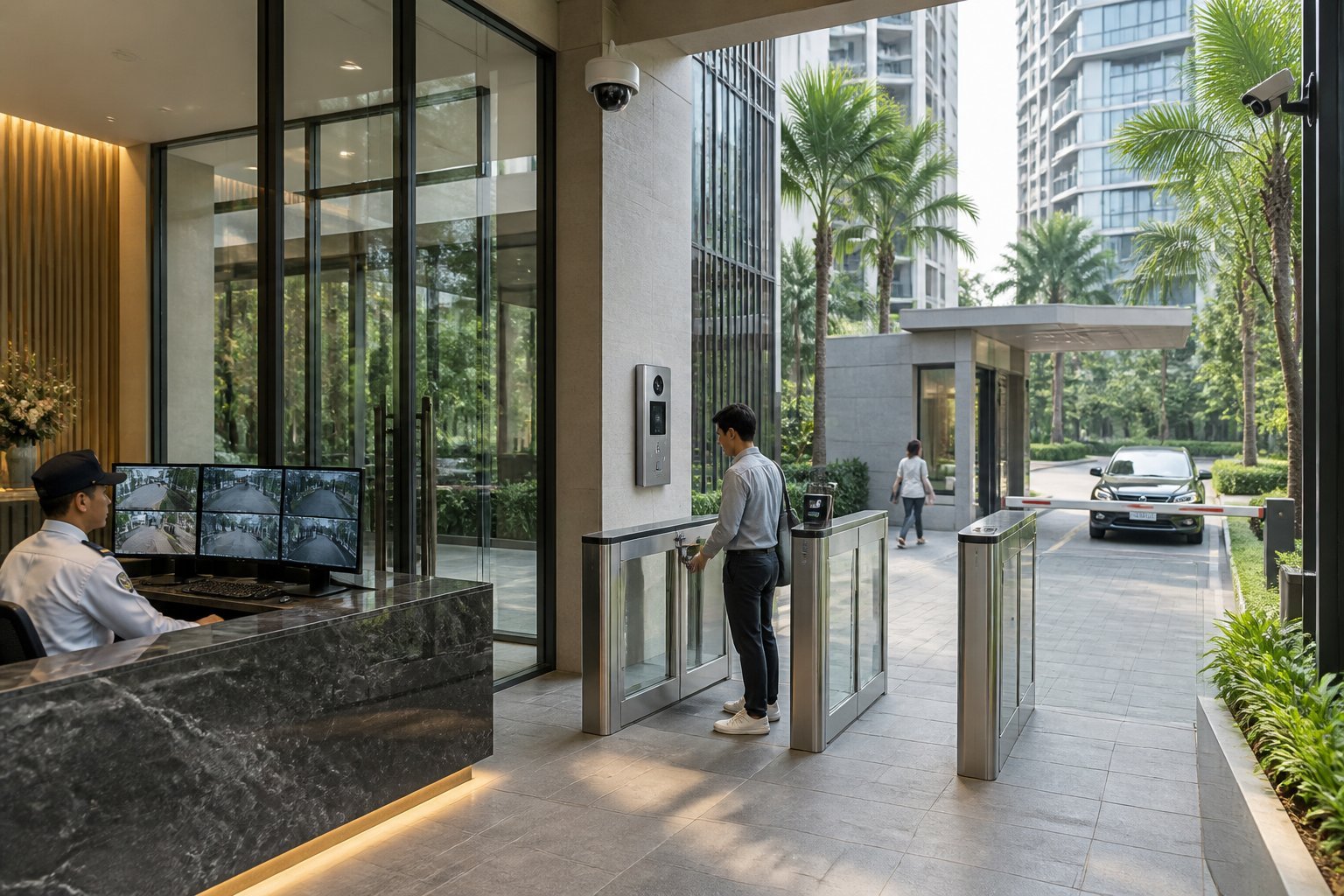
Singapore condominium security works best as a connected operating system, not a collection of isolated devices. Shared vehicle entrances, pedestrian gates, lift lobbies, delivery traffic, and visitor registration each create different control points for an MCST and its managing agent.
The strongest upgrades connect video evidence, vehicle identification, visitor verification, intercom communication, and resident credentials to a central audit trail. That arrangement helps security officers respond faster while giving residents convenient access and giving councils clearer oversight of management workload and privacy controls.
Quick picks:
- Best overall: Hikvision CCTV With Real-Time Remote Monitoring
- Best for vehicle control: License Plate Recognition (LPR) at Vehicle Barriers
- Best for visitor records: myCondo Visitor Management System (VMS)
- Best for resident convenience: App-Based Video Intercom With Remote Door Release
1) Hikvision CCTV With Real-Time Remote Monitoring
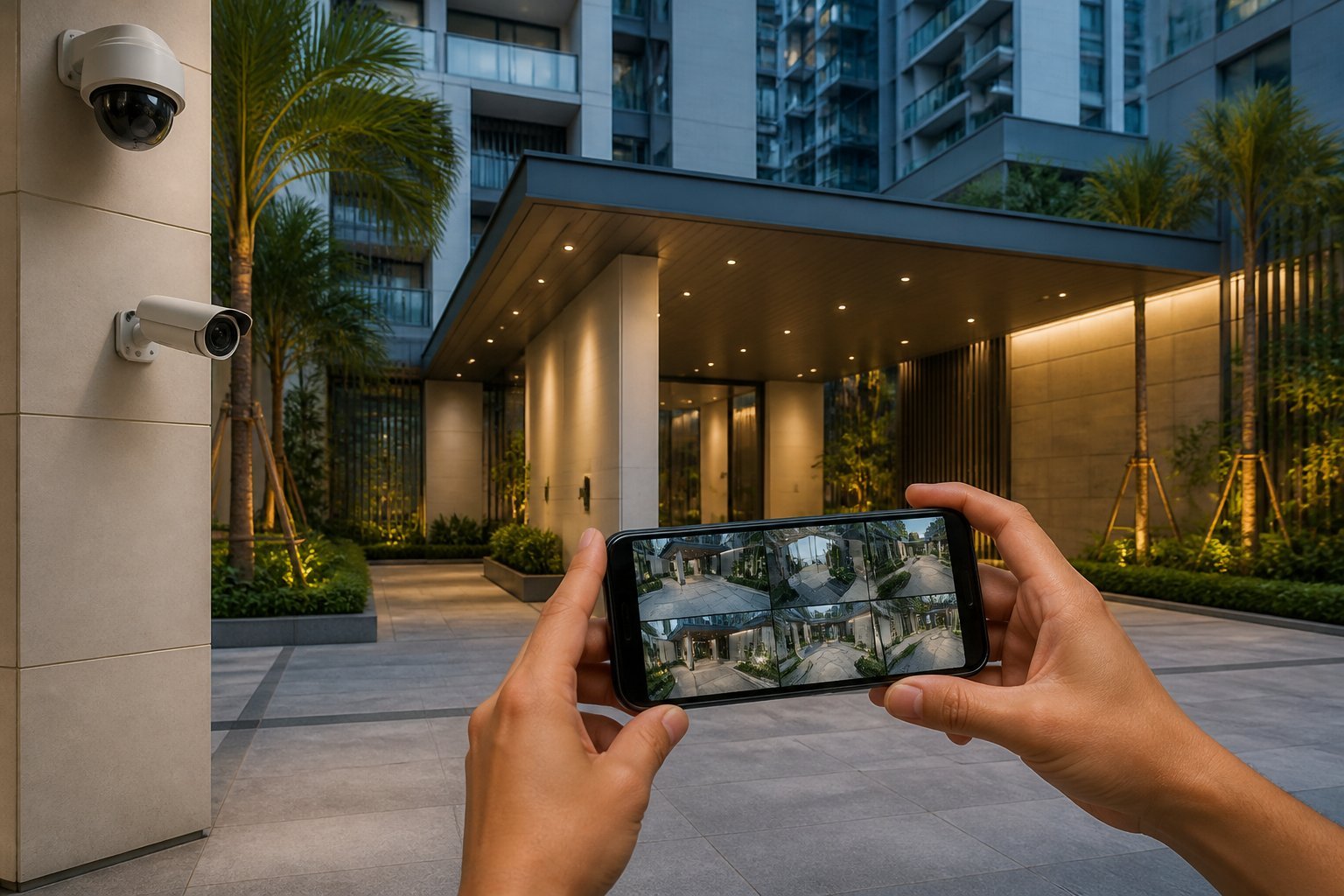
Hikvision CCTV with remote monitoring gives the estate a visual record for incident response, access verification, and post-event review. Proper camera placement at vehicle barriers, lift lobbies, parcel areas, side gates, and blind corners delivers more value than adding cameras without an operational plan.
A security officer or managing agent can view live feeds remotely through an authorised platform, while motion alerts and time-stamped footage help identify relevant events. The system becomes more useful when linked with visitor and vehicle records, allowing management to compare a camera timestamp with a guest check-in or barrier entry.
MCST councils should specify retention periods, role-based access, export controls, and clear procedures for footage requests. Cameras should avoid unnecessary views into homes and private areas, with signage and access policies aligned to Singapore privacy expectations.
Hikvision equipment also requires network segmentation, secure passwords, firmware maintenance, and reliable storage. A short retention period with dependable retrieval is more practical than a large archive that staff cannot search efficiently.
2) License Plate Recognition (LPR) at Vehicle Barriers
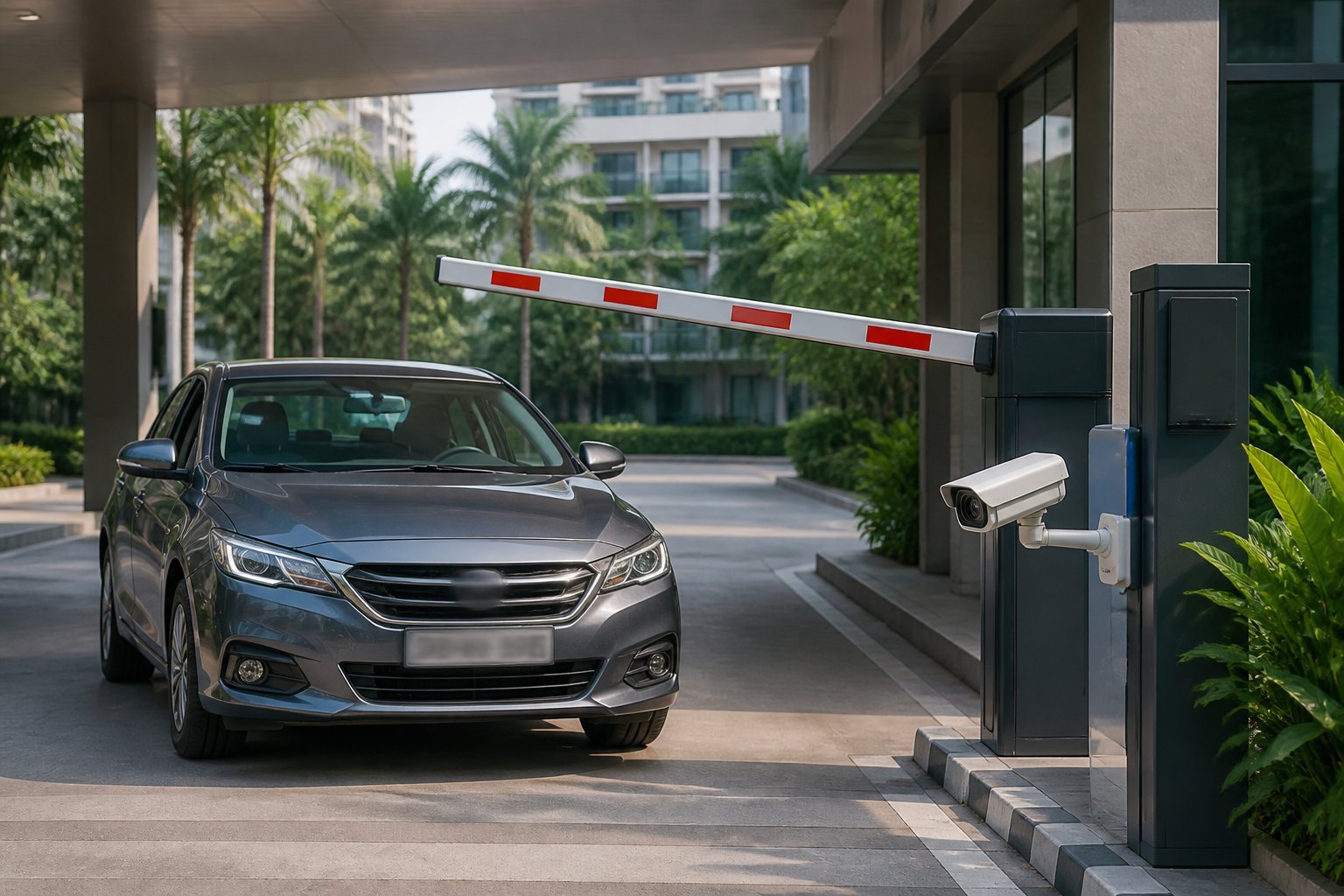
License Plate Recognition at vehicle barriers automates vehicle identification and creates a traceable entry record for residents, guests, contractors, and delivery vehicles. It reduces manual checks at busy peak periods while preserving a barrier-based access decision.
An LPR camera reads a vehicle registration number and compares it with an approved list or temporary permission. Integration with a central platform such as myCondo lets management connect the plate record with resident credentials, visitor invitations, and security alerts.
Singapore estates should plan for motorcycles, reflective plates, rain, glare, tailgating, and vehicles with unreadable plates. A staffed exception process remains necessary, with intercom support or a security console for disputed matches.
The strongest deployment separates resident access from visitor approval. Residents receive convenience through registered vehicles, while visitor plates can expire automatically after a booking window. Councils should also define who can search vehicle logs, how long records remain available, and how correction requests are handled.
3) myCondo Visitor Management System (VMS)
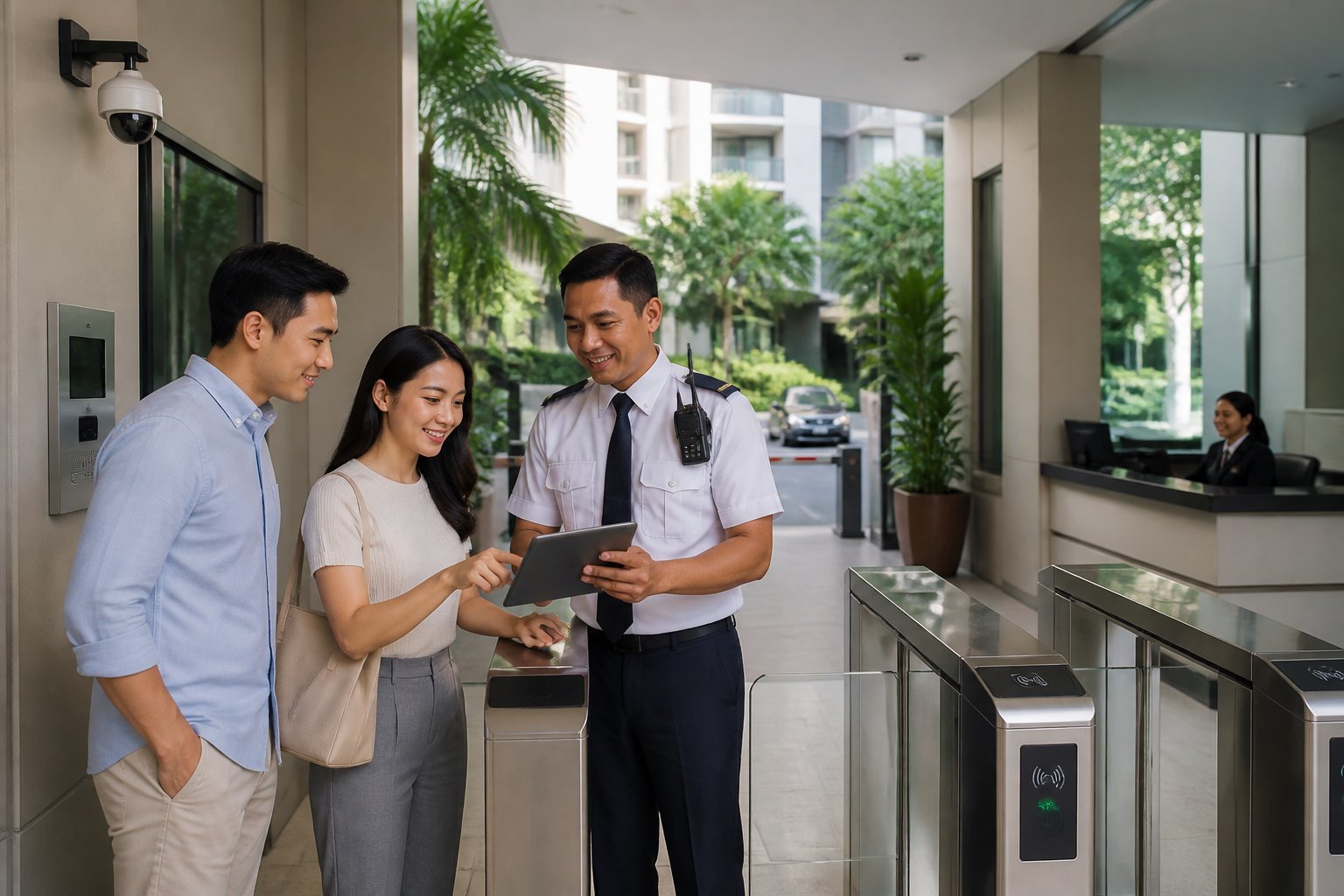
The myCondo Visitor Management System centralizes guest registration, approval, notifications, and audit trails for a multi-unit estate. It replaces fragmented paper records and informal phone calls with a consistent workflow at the guardhouse or lobby.
Residents can pre-register guests, service providers, and expected deliveries, while officers verify arrivals against the digital record. Temporary permissions reduce repeated manual entry and provide expiry times for contractors or event visitors.
VMS integration becomes especially valuable when visitor records connect with CCTV timestamps, LPR events, and remote door release. Management can investigate an incident using one sequence of records instead of asking several teams to reconcile separate systems.
Operational design still determines success. The estate should provide a fallback for visitors without smartphones, establish procedures for unregistered guests, and train officers to correct duplicate or inaccurate records. Data access should be limited by role, with retention rules covering identity details, visit times, and host information.
4) App-Based Video Intercom With Remote Door Release
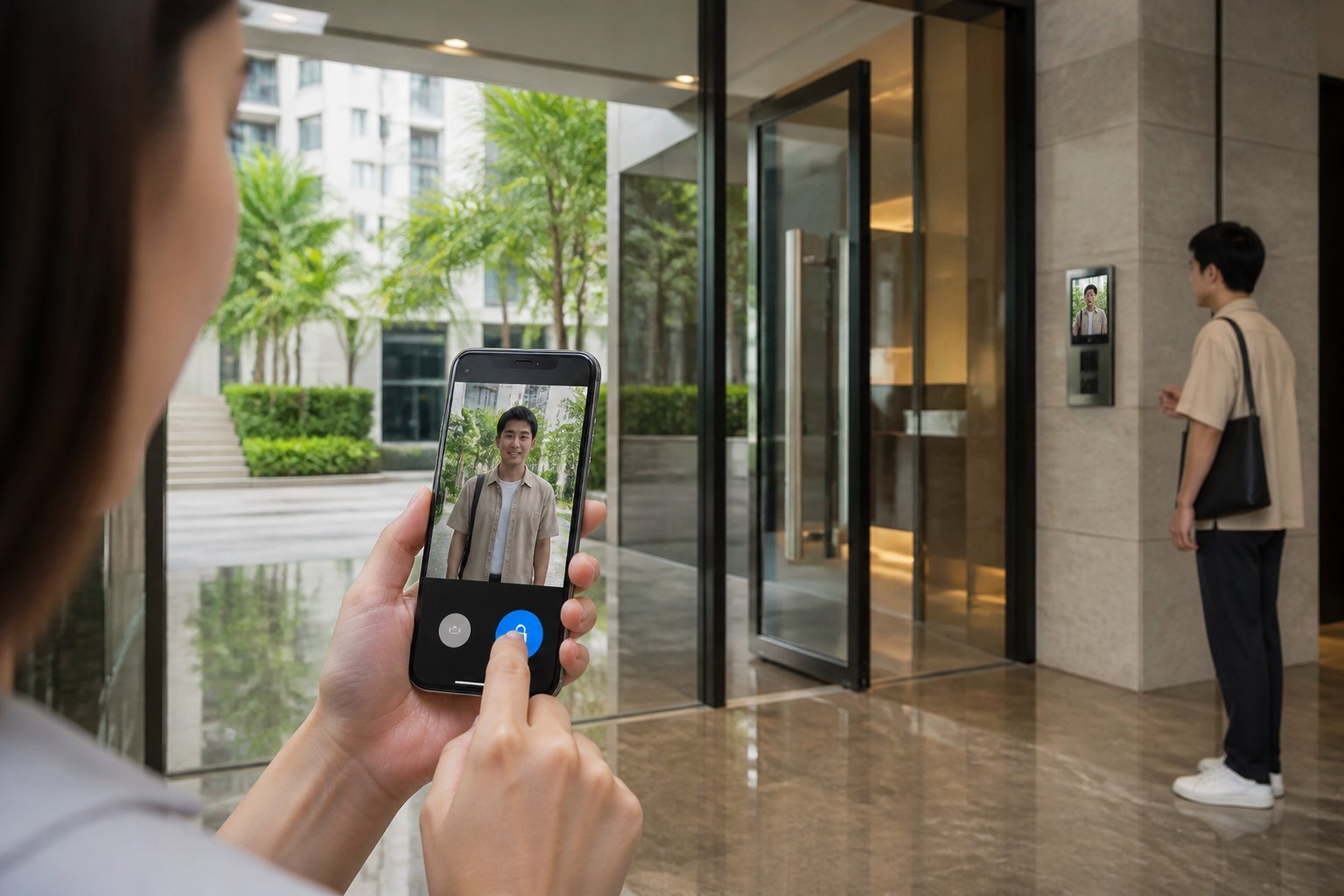
An app-based video intercom enables residents to verify visitors visually and release an approved entrance remotely. It suits estates handling deliveries, domestic helpers, family visits, and after-hours arrivals across multiple access points.
A resident can receive a call, view the entrance camera, speak with the visitor, and unlock a designated door through the mobile app. The release event should record the resident account, location, and time, creating accountability without requiring security staff to manually open every gate.
MCSTs should confirm mobile coverage, app compatibility, backup calling methods, and door-controller behaviour during an internet outage. Remote release also needs sensible permissions, such as limiting access to a lobby door while keeping vehicle barriers under separate controls.
Privacy settings deserve attention because intercom footage and conversations involve visitors as well as residents. Clear notices, short retention periods, and revocable user permissions help balance convenience with responsible estate administration.
5) Biometric or Mobile Access Control With Digital Locks
Biometric or mobile access control with digital locks strengthens pedestrian and restricted-area entry by tying permissions to an individual credential. Fingerprint readers, facial recognition, Bluetooth keys, QR codes, and mobile credentials each suit different access points and resident preferences.
Mobile credentials reduce physical key handling and support fast revocation when a resident moves out or a contractor’s authorization ends. Biometrics remove the need to carry a device, although enrolment, consent, hygiene, accessibility, and fallback access require careful planning.
The best configuration separates public lobby access from sensitive locations such as management offices, plant rooms, server cabinets, and rooftop areas. Access events should feed into a centralized log alongside visitor and vehicle activity, with administrators able to suspend credentials promptly.
Councils should assess reader reliability in rain, lift-lobby congestion, power failures, and network interruptions. Digital locks also need mechanical override procedures, battery monitoring, firmware updates, and a documented response when a credential is lost or compromised.
How to Choose Security Features for Your Condo
A suitable condo security upgrade begins with the estate’s highest-risk movement points and ends with a maintainable operating workflow. The following comparison highlights how the five features contribute to connected protection.
| Feature | Primary control point | Main record created | Resident convenience | Integration value |
|---|---|---|---|---|
| Hikvision CCTV | Common areas and gates | Video footage | Medium | High |
| LPR barriers | Vehicle entrance | Plate and time log | High | High |
| myCondo VMS | Visitor entrance | Guest audit trail | High | High |
| Video intercom | Pedestrian doors | Call and release event | High | High |
| Biometric/mobile access | Controlled doors | Credential event | High | Medium to high |
Which Entry Points Create the Highest Security Risk?
Vehicle barriers, pedestrian gates, lift lobbies, side entrances, parcel rooms, and service corridors deserve a documented risk assessment. The council should review tailgating, blind camera angles, delivery congestion, contractor movement, and doors that remain propped open.
A site walk during morning and evening peaks exposes operational weaknesses that a floor plan misses. LPR and CCTV suit vehicle approaches, while VMS, intercoms, and access control address people entering shared spaces.
How Well Will New Devices Integrate With Existing Systems?
Integration should be tested through real workflows, including a pre-registered visitor, an unrecognised vehicle, a remote release, and a footage search. The estate should confirm compatible APIs, access-controller protocols, network capacity, user directories, and alert delivery before approving equipment.
A central dashboard reduces duplicated work when it links CCTV, visitor management, vehicle barriers, and resident credentials. Councils should request a staged pilot at one entrance and insist on documented handover procedures.
Who Will Monitor Alerts and Maintain the System?
Every alert needs an owner, response time, escalation path, and closure record. The managing agent, guardhouse team, MCST representative, and technology provider should have clearly separated responsibilities.
The maintenance plan should cover camera cleaning, barrier servicing, reader calibration, storage health, firmware updates, cybersecurity checks, and staff refresher training. Service-level agreements should state response times for failed gates, offline cameras, and access outages.
Questions to Ask Before Approving an Upgrade
A council should approve an upgrade only after the supplier explains how the system will operate during normal traffic, exceptional events, outages, and staff changes. Procurement documents should define measurable performance requirements and resident-facing policies.
Can the System Centralize CCTV, Visitor, and Vehicle Records?
The supplier should demonstrate a searchable dashboard that connects a time, location, vehicle plate, visitor profile, credential, and video clip. Management should confirm whether records can be exported in a usable format with permissions and audit logs preserved.
The demonstration should include a complete incident trail from visitor registration to gate entry and lobby footage. Separate portals that require repeated manual matching increase administrative effort and investigation time.
How Is Resident and Visitor Data Protected?
The proposal should identify data fields collected, storage location, encryption controls, retention periods, administrator permissions, and deletion procedures. Biometric templates require particular care, including consent handling and a practical alternative for residents who do not enrol.
The estate should require strong authentication, individual administrator accounts, access logging, secure backups, and prompt credential revocation. Vendor access for troubleshooting should be time-limited and recorded.
What Are the Ongoing Maintenance and Support Costs?
The financial assessment should include subscriptions, cloud storage, replacement readers, camera servicing, barrier repairs, connectivity, software updates, training, and after-hours support. Hardware pricing alone does not show the cost of running a condo security system.
The MCST should request a three-to-five-year cost schedule and service-level agreement. It should also confirm ownership of configuration data and records if the managing agent, platform, or security contractor changes.